
The Short Answer
Self-healing PPF has a flexible top coat that pulls light scratches and swirl marks back out when the film gets warm. Sun, warm water or a heat gun starts the process. It works on marks in the top coat, not on cuts that go through the film.
Every XPEL film we install at Autograff has this top coat: Ultimate Plus, Ultimate Fusion, Stealth and Color PPF. Full Front starts from $2,000 and Full Body from $4,500, quoted per car and before sales tax.
How the Top Coat Heals
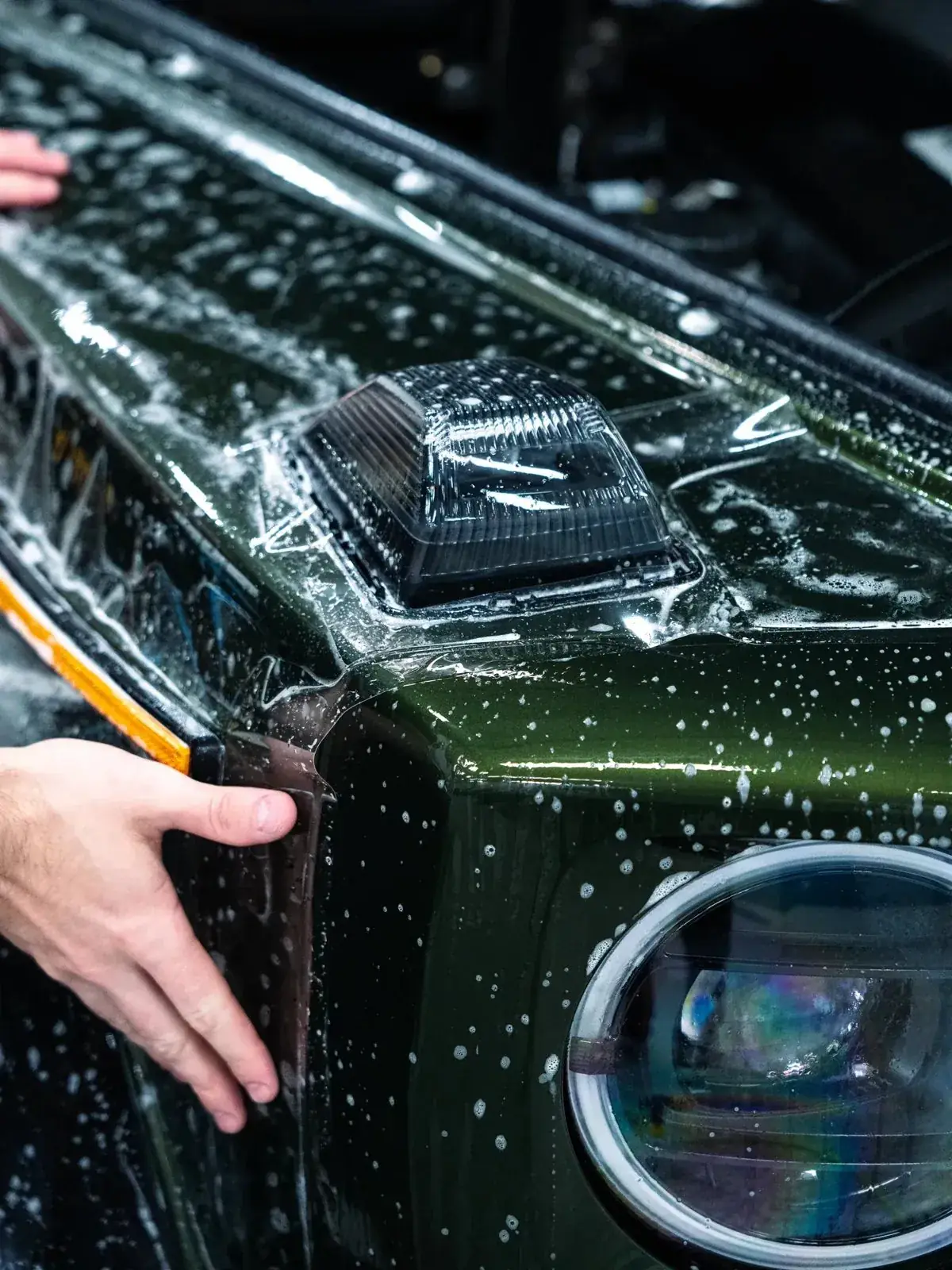
The film is built in layers. A clear top coat sits over the main film body, and an adhesive layer holds it to the paint. The top coat is soft enough to move, but it remembers its shape.
When a key, a brush or a dirty wash mitt drags across it, the surface is pushed into a fine scratch. Heat makes the top coat relax, and it flows back to a smooth surface. The scratch fades in seconds to minutes, depending on how warm the film is.
What Triggers It
On a warm day in the Valley, the sun alone is often enough. A car parked outside will heal light swirls while you are at work. You do not have to do anything.
In cooler weather, or for a mark you want gone sooner, warm water does the job. Pouring warm water over the panel, or washing with warm water, speeds it up. Our installers also use a heat gun at the studio. We do not recommend heat guns for owners, since too much heat in one spot can harm the film.
What Self-Healing Can and Cannot Fix
It helps to know the limit before you rely on it.
| Mark | Heals | Does not heal |
|---|---|---|
| Scratches | Light scratches and swirl marks in the top coat | Deep scratches that cut through the film |
| Marks | Wash marring and light scuffs | Gouges, torn edges and impact damage |
| Surface | Fine marks from brushes and mitts | Stains left to bake on the surface |
A deep scratch that cuts through the film needs professional repair, and sometimes the panel is replaced with new film. That is still cheaper than paint work on the car underneath.
Do All PPF Films Self-Heal
Every film in our lineup does, and the gloss and satin versions work the same way. Stealth, the satin film, heals with heat as well. Our satin vs gloss PPF page compares the two finishes side by side.
Vinyl wrap is a different product. It is thinner and made for color, and it does not carry the same top coat. Our PPF vs wrap guide covers the gap.
Which Films Cost What on a Tesla
These are starting prices from the Autograff price list for a Full Body install. Self-healing is included in both films, so the difference in price is the finish and the car.
| Model | Ultimate Plus | Stealth |
|---|---|---|
| Model 3 / Model Y | from $5,500 | from $6,000 |
| Model S / Model X | from $6,000 | from $6,500 |
Full Front in Ultimate Plus starts from $2,000 on a Model 3 or Model Y and from $2,500 on a Model S or Model X. The Tesla PPF page lists every option.
Caring for Film So It Keeps Healing
Self-healing does not replace good washing. Dirt dragged across the surface makes more marks than the top coat can clear. Use a clean mitt, plenty of water and a gentle soap.
Do not polish or compound film, since that thins the top coat. Wait a few days to a few weeks for small install bubbles to settle as the film cures. Our PPF care guide has the first wash steps.
Warranty
XPEL covers Ultimate Plus and Stealth with a 10-year warranty, and the film also resists yellowing and staining. Autograff is an XPEL Authorized Dealer, and Tesla lists us as an XPEL installer. Ask us at pickup what the warranty covers for your car.
Is It Worth Paying For
If your car sees freeways, parking lots and street parking, light marks are the most common damage it will get. Film that clears those on its own keeps the car looking new between details. Stop by the studio in North Hollywood and we will show you a sample, and warm it so you can see the healing for yourself.