
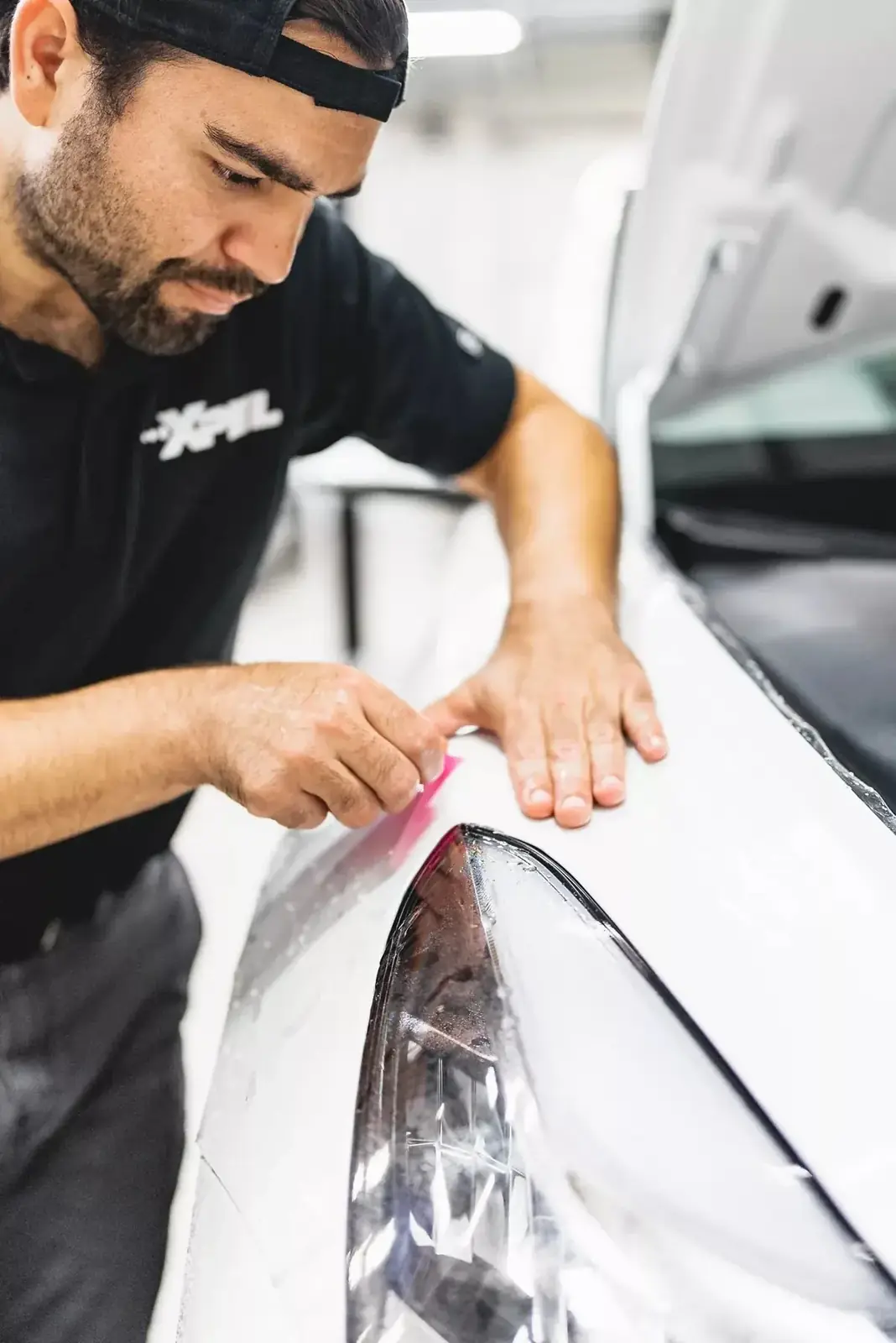
What Windshield Protection Film Is
Windshield protection film is a clear film applied to the outside of the glass. Its job is to take the small impacts that pit and chip a windshield: sand, gravel and debris thrown up on the freeway. It is not tint, it does not change how the glass looks, and it is a different product from the film we install on the inside of a windshield for heat.
It sits in the same family as paint protection film. The idea is the same: a sacrificial layer takes the hit so the surface under it does not.
What It Costs
Windshield protection film is $600 at Autograff, before sales tax. The price is the same on our PPF pages for Tesla and other cars, and it can be added to a Full Front or Full Body install or done on its own.
| Windshield film | Protection film | Heat tint (XR Black) |
|---|---|---|
| Where it goes | Outside of the glass | Inside of the glass |
| Price, most cars | $600 | $180 |
| Price, Tesla Model 3 | $600 | $299 |
| Main job | Chips and pitting | Heat and UV |
For a Tesla Model Y or Model S, the windshield heat tint in XR Black is also $299. You can see the full list on our Tesla paint protection film page.
Who It Is Worth It For
The film earns its price the most when the car sees real freeway miles. If you commute on the 101, 134, 170 or 405, or drive to Santa Barbara or Palm Springs on weekends, the windshield takes far more impacts than the paint does on a car that stays on surface streets.
It also makes sense in these cases:
- A new car you plan to keep. Putting the film on while the glass is still clean means it protects from the first mile.
- A Tesla. The windshield is a large piece of glass facing the road, so there is more surface for debris to hit.
- A car already getting full front protection. If you are covering the hood and fenders, the windshield is the next surface facing the same debris.
When It May Not Be Worth It
If the car is mostly parked, driven a few miles a day on city streets, or you expect to sell it within a year, the benefit is smaller. $600 is a real cost, and it is worth being honest about that.
The film also has limits. It reduces damage from small impacts. A large stone at highway speed can still chip or crack glass, with or without film. We would not sell it as a guarantee against any kind of damage.
Protection Film Is Not Heat Tint
People often mix the two up. Protection film goes on the outside and is about chips. A windshield tint goes on the inside and is about heat and UV. Our post on how much heat windshield film actually blocks covers the tint side, including prices and the Tesla and Rivian windshields.
If heat is your main concern, a heat film is the right purchase. If chips are the concern, protection film is. Some owners want both, and they are separate products with separate prices.
For rules on tint on the front glass, see California window tint laws. Protection film is clear, so it does not change how dark the glass is.
How It Fits With PPF
Most owners add windshield film when they already plan paint protection. Full Front starts from $2,000 and Full Body from $4,500, with Tesla Model 3 and Model Y Full Body from $5,500. These are approximate and depend on the car and film, so check our PPF cost guide for Los Angeles for the full breakdown.
Questions to Ask Before You Decide
First, how many freeway miles does the car do in a normal week? Daily highway driving is where pitting builds up fastest, and it is the clearest sign the film will pay off.
Second, is the glass already damaged? Film goes over the outside of the glass, so existing chips and pits stay under it. It protects what is clean today and does not repair what is already there. If the glass is already pitted, replacing it first and then filming the new glass is a conversation to have with your glass shop.
Third, what else is on your list? If you are choosing between paint protection and windshield film, paint usually comes first, because a repaint costs far more than a chip. If you are choosing between windshield film and heat tint, decide whether chips or heat bother you more.
Our Take
Windshield protection film is worth it if you drive the freeway every day and plan to keep the car. If you do not, put the money toward paint or tint first. Bring the car by the North Hollywood studio and we will look at the glass and tell you what we would do.