
The Short Answer
XPEL, 3M and Llumar are all established window film brands, and a film from any of them can look good on a car. The brand name on the box is only part of the result. How the film is made, how it is installed and who stands behind the warranty matter just as much.
At Autograff we are an XPEL Authorized Dealer, so XPEL is the film we install and the one we can speak about with real numbers. We have not tested 3M or Llumar films in our studio, so this guide does not rate them. It shows you how to compare any two brands fairly.
Why We Do Not Rank Brands by Name
Search results are full of "brand A beats brand B" claims, and most of them compare different films at different price levels. Every brand sells a basic dyed or carbon line, a mid-range ceramic line and a premium line. Putting one brand’s entry film next to another brand’s top film tells you nothing.
The honest comparison is line against line. A carbon film against a carbon film, a nano-ceramic against a nano-ceramic, each on the same car with the same shade.
Five Things to Compare on Any Tint
- Film type. Dyed, carbon, ceramic or nano-ceramic. This sets how much heat the film can stop and how it ages.
- Infrared rejection. This is the heat you feel on your skin. Ask for the figure for the exact film and note whether it is a total solar number or an infrared number, because they are not the same measure.
- Shade and clarity. The percentage describes how dark the glass looks. In XPEL nano-ceramic, heat rejection does not change with shade.
- Warranty. Who honors it, what it covers (bubbling, peeling, fading) and whether it transfers when you sell the car. Get it in writing.
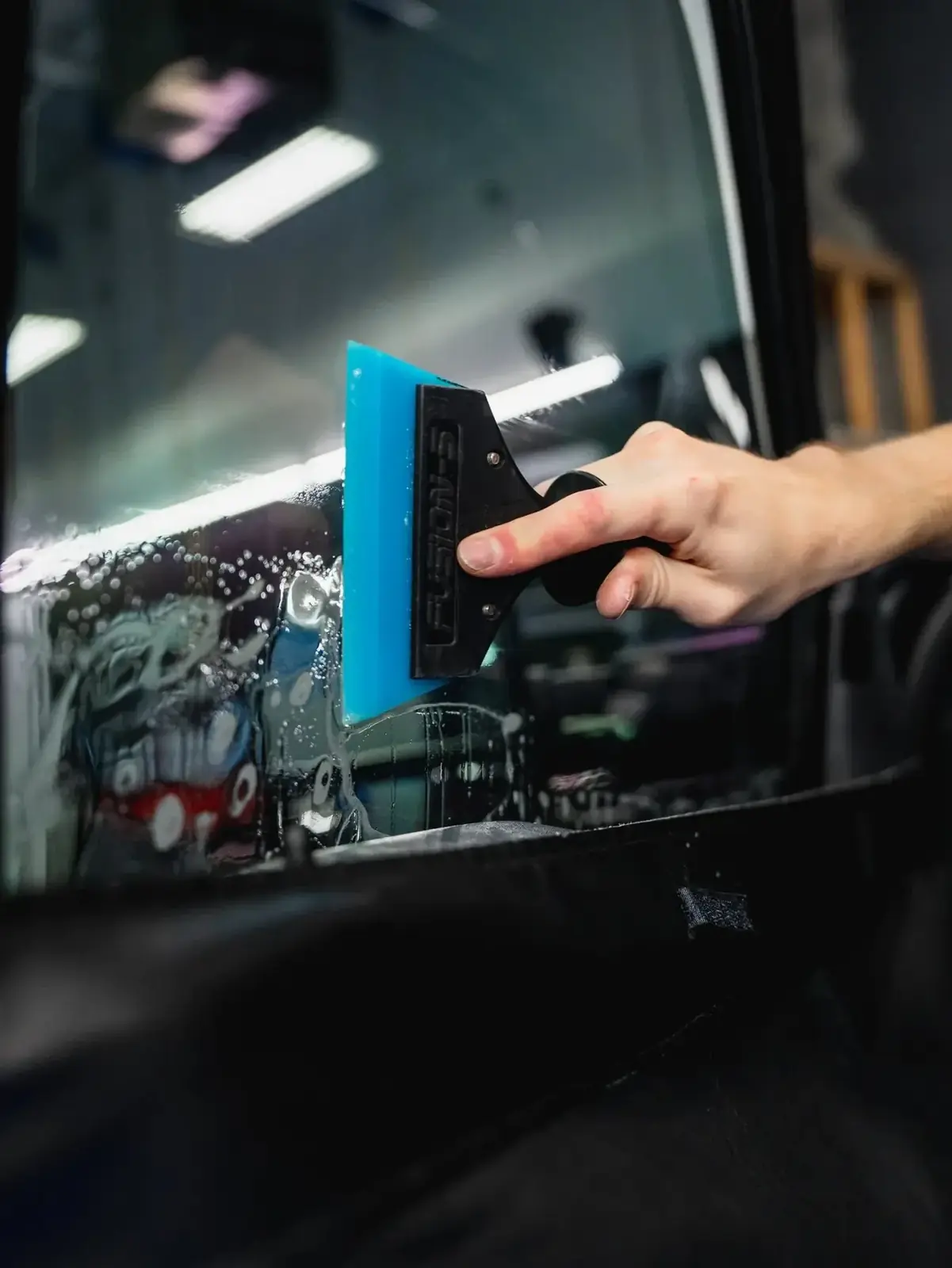
- The installer. A precise cut, clean edges and no dust under the film come from the person with the squeegee, not from the label on the roll.
The XPEL Lineup at Autograff
These are the three car window films we install, with our current prices before sales tax. Our carbon vs ceramic guide explains the difference between the film types in more detail.
| Spec | Prime CS | XR Black | XR Plus |
|---|---|---|---|
| Film type | Carbon | Nano-ceramic | Nano-ceramic |
| Infrared heat rejection | Up to 35% | Up to 85% | Up to 96% |
| UV blocked | 99% | 99% | 99% |
| Sedan or SUV, all side windows + Rear Window | $250 | $350 | $450 |
| Windshield, most cars | XR Black only | $180 | $250 |
| Warranty | Lifetime | Lifetime | Lifetime |
Prime CS is the budget-friendly carbon film. XR Black and XR Plus are nano-ceramic, which is where the heat control is. We do not put Prime CS on a windshield. Prime CS customers get the windshield in XR Black. Our XR Black vs XR Plus guide walks through the choice between the two upper films.
What the Install Changes
Two cars can get the same film and end up with different results. Dust trapped under the film, edges that do not follow the glass and rushed heat-shrinking all show up in the first week. The film is the same, the result is not.
Every Autograff install is done inside our North Hollywood studio, not in a driveway or a parking lot. For a Tesla, the same applies to the curved rear glass and the glass roof. You can see the full Tesla price list on our Tesla window tint page.
Questions to Ask Any Shop
Whichever brand you lean toward, these questions give you a clear picture before you pay anything:
- Which exact film and shade are you quoting, and what is the infrared rejection of that film?
- Is the price per window set, and does it include the Rear Window and any extras?
- Where is the car tinted, and how long will it take?
- What does the warranty cover, who honors it and does it transfer?
A Note on Legal Shades
Brand does not change the rules. California limits how dark the front side windows and the windshield can be, and the same limits apply to every film. Read our guide to California window tint laws before you choose a shade.
See It on Glass
If you are comparing quotes, come by the studio and look at the films on real glass in daylight. You can also see every film and price on our automotive window tint page.